Thinking, learning and practice from real work across Africa.
Field notes, flagship essays and honest experiments, the same body of practice that informs everything Akijul does, made shareable.
Change is a practice, not a deliverable
Twenty-five years of work across the continent taught us one thing first: the change that lasts is the change people build themselves. Here is the philosophy that informs everything we do.
Read the essay ↓Founder, Akijul Consulting

Change is a practice, not a deliverable
Akijul takes its name from akijulakin, the Ateso word for change. We chose it deliberately: change is not a report we hand over. It is something a community does, in its own language, on its own terms.
For most of two decades I watched well-funded interventions arrive in a place, run their course, and leave very little behind once the budget closed. The diagnosis was rarely wrong. The strategy was often elegant. What was missing was the thing no slide deck contains: the capacity, inside the organisation or the community, to keep going without us.
That observation became the spine of how Akijul works. We treat enterprise as a practice rather than a product. A practice is something you do repeatedly, get better at, and own. It cannot be delivered to you in a single engagement, and it does not depend on the consultant staying in the room.
Facilitate, don't prescribe
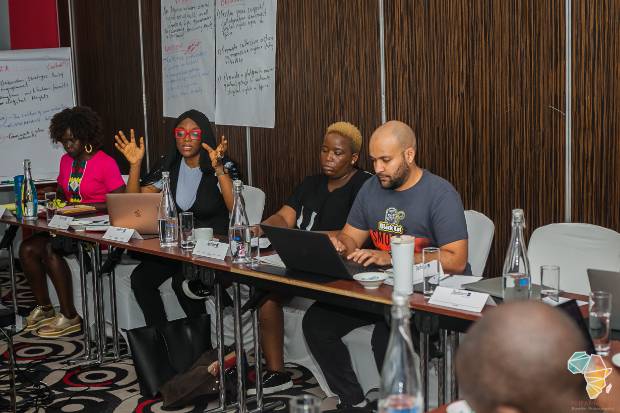
The prescribing consultant arrives with the answer and spends the engagement defending it. The facilitating consultant arrives with better questions and spends the engagement helping people find answers they will actually defend themselves. We have come to believe the second produces change that survives, because the people who built the strategy are the people who carry it.
This is slower in the room and faster in the world. A strategy that is co-authored is tested as it is made, against the realities only the people on the ground can see. By the time it is written down, it has already been argued with.
From practice to systems
Practice generates learning, and learning, when it accumulates honestly, carries implications for policy and for systems. That is the arc we try to complete: what works on the ground in one organisation becomes a reliable lesson, and a reliable lesson becomes an argument that can move a sector. We are not interested in insight for its own sake. We are interested in the kind that changes how things are done.
Akijul exists to hold that whole arc, from the working session to the systemic implication, in one coherent body of work. The essays in this series are our attempt to make that practice shareable: not a methodology to be licensed, but a way of working you are welcome to argue with, adapt, and make your own.
More from the practice
Updated regularly on LinkedInThe room tells you what the report cannot
Some of the most important findings of an engagement never make it into the terms of reference. They surface in who speaks and who stays quiet, in which decision keeps getting deferred, in the side conversation after the session formally ends. Working across fifteen countries has taught us to treat the room as a primary source, and to design our facilitation so the quiet signal has somewhere to go.
Read more →What AI actually changes inside a small organisation
The honest lesson from putting AI tools into real organisational workflows is that the technology is the easy part. The hard part is judgement: knowing which tasks to hand over, where a confident-sounding answer is quietly wrong, and how to keep the team’s own expertise in the loop. We share the workflows that held up, the ones that did not, and why adoption is a change problem before it is a tooling one.
Read more →In her element: enterprise as a site of transition
Across our research, women building enterprises are rarely only building enterprises. They are navigating transitions, of role, of household, of standing in their communities, at the same time. Treating the business plan in isolation from that transition misses what makes it succeed or stall. This strand of work follows enterprise as a lived process rather than a financial one.
Read more →Where creative intelligence meets enterprise
Strategy work tends to reward the analytical and distrust the creative. Our experience runs the other way: the organisations that adapt best are the ones that can imagine a different arrangement of the same facts. Creative intelligence is not decoration on top of strategy. It is the capacity to see an option that the spreadsheet cannot, and it can be practised deliberately.
Read more →LinkedIn is our home for Insights. Follow along as the practice unfolds.
Follow on LinkedIn Consulting
Research. Strategy. Change. Grounded in Practice.
akijul.com